




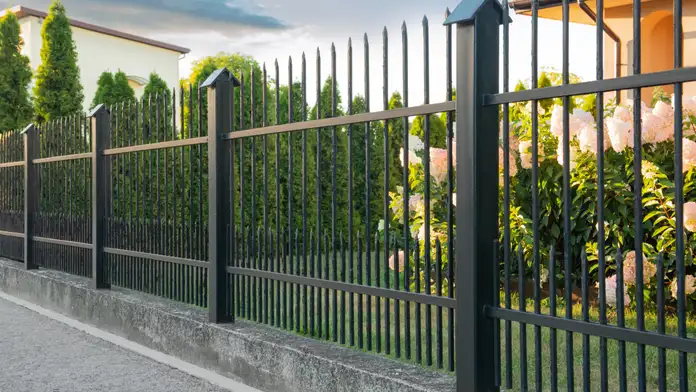
Wrought Iron Fence Cost
Planning to install a wrought iron fence, but not sure what it will cost? The final price depends on several factors, including the size of your yard, the fence height, the design, and the complexity of the installation.



Your material choice will make the biggest difference in your metal fence estimate. Each metal has its own strengths that justify the price.
A 4-foot fence uses about 30% less material than a 6-foot fence, but labor costs don't drop proportionally because setting posts takes the same effort either way.
Height-based pricing:
Longer fence runs usually mean better per-foot pricing through bulk discounts and more efficient installation. A 200-foot project typically costs 10–15% less per foot than a 50-foot job because of reduced setup costs and streamlined work.
Simple three-rail designs with straight runs help keep metal fence installation costs down, while decorative details, curves, and custom elements can double what you pay. Standard pre-made panels start around $15 per linear foot, while custom ornamental fencing reaches $60+ per foot.
What drives up costs:
Sloped properties need stepped or contoured installation, adding $8–$15 per linear foot, depending on how steep it is. Gates are another big variable—basic walk-through gates start at $200, while automated driveway gates run $3,000–$8,000.
Where you live makes a real difference. Big cities typically run 20–35% higher than rural areas.
Regional differences in the cost to install a metal fence:
Shipping materials to remote locations can add $200–$800 to your project. Areas with high contractor demand charge premium rates during peak season (April through September).
Beyond basic installation, several costs catch people off guard. A complete metal fence estimate should include these from the start.
Site preparation:
Property-specific challenges:
Concrete for setting posts adds $3–$6 per linear foot beyond basic quotes. Some installers include this, others list it separately, which makes comparing estimates tricky.
Labor typically makes up 40–55% of the total metal fence cost, averaging $12–$25 per linear foot depending on complexity. This covers setting posts, installing panels, hanging gates, and final adjustments.
Popular add-ons expand both functionality and the cost of metal fencing:
These features integrate more easily during initial installation than as retrofits, often saving 15–25% compared to adding them later.
Metal fencing needs less maintenance than wood, but it's not maintenance-free. Annual upkeep typically costs $100 to $400, depending on material and environment.
Aluminum and Galvanized Steel: These low-maintenance choices just need occasional cleaning with mild soap and water. Annual costs stay minimal at $50–$150 for cleaning supplies and touch-up paint for scratches.
Wrought Iron and Untreated Steel: These need repainting or powder coating every 4–7 years at $3–$8 per linear foot. Annual rust inspection and treatment runs $100–$300 for preventive care. Skip this maintenance, and you'll face structural problems requiring expensive repairs.
Minor repairs like fixing a bent panel or replacing a damaged post cost $150–$500. But extensive damage affecting more than 30% of the fence often makes replacement more economical.
Common repair costs:
Fences over 20–25 years old with widespread problems usually warrant replacement rather than extensive repairs. The better designs and materials available today make new installations worthwhile when repair costs approach 50% of replacement value.
Confident DIYers can cut the cost to install a metal fence by 40–60% through self-installation, though you'll need specific skills and equipment. Material costs stay the same at $10–$35 per linear foot, while you eliminate the $12–$25 per foot labor charge.
Required tools and equipment:
If the average cost for metal fence installation is pushing your budget, try these strategies:
While the initial metal fence cost is higher than wood or chain link, the investment pays off in longevity and looks. A high-quality aluminum or steel fence can last 50+ years with minimal effort, while wood fences often need replacing every 15 years.
If you plan to stay in your home long-term, metal fencing is arguably the most cost-effective choice. It boosts curb appeal, improves security, and helps you avoid the headaches of constant maintenance.
Wood fencing costs $15–$35 per linear foot installed, seemingly competitive with aluminum at $22–$32 per foot. But wood needs staining or sealing every 2–3 years ($500–$1,500 per treatment), repainting every 5–7 years, and typically needs replacement after 10–15 years. Metal fencing's 25–50 year lifespan and minimal maintenance make it more economical long-term despite higher upfront costs.
Vinyl costs $20–$40 per linear foot, comparable to aluminum but less than wrought iron. Vinyl needs virtually no maintenance and resists rot and insects, but it can crack in extreme cold, fade in intense sunlight, and offer less security than metal. Metal provides superior strength and a more upscale appearance, making it better for security-focused or high-end applications.
If you’re still comparing materials, you can also review HomeBuddy’s fencing cost guides to compare metal, wood, and vinyl fencing costs side by side.
Yes, concrete is essential for metal fence posts to ensure stability and longevity. Posts should go in holes 24–36 inches deep (or below frost line in cold climates) with 6–8 inches of gravel for drainage, then surrounded by concrete. This prevents frost heaving, wind damage, and gradual leaning. Fast-setting concrete costs $6–$12 per 50-pound bag, with typical installations needing 1–2 bags per post. While some installers use tamped earth for temporary or lightweight fences, concrete is the professional standard for permanent installations.
The metal fence cost is typically 20–50% more initially than wood and roughly matches vinyl pricing but offers superior long-term value. A 150-foot wood fence costs $2,250–$5,250 installed versus $3,300–$4,800 for aluminum, but the wood fence requires $600–$1,200 in maintenance every 3 years, plus eventual replacement. Metal's durability, security advantages, and minimal maintenance offset the higher purchase price within 10–12 years for most homeowners.
Metal fence lifespan varies by material and maintenance. Aluminum fences last 25–30 years with minimal care, galvanized steel chain-link endures 15–25 years, and properly maintained wrought iron can exceed 50–100 years. Coastal environments reduce these timespans by 20–30% due to salt corrosion, while dry climates extend longevity. Regular cleaning, prompt rust treatment, and repainting as needed can add 10–15 years to any metal fence's life, making it one of the longest-lasting fencing options available.
Quality metal fencing typically increases property value by 50–70% of the metal fence cost, which is up to $1,400–$5,950 for average installations. Real estate analyses show that attractive fencing ranks among the top 20 exterior improvements for return on investment. Wrought iron and ornamental aluminum fencing in front yards provide the highest returns, while chain-link offers minimal value increase. The security, curb appeal, and defined boundaries that metal fencing provides make homes more marketable, often helping homes sell faster in some markets.