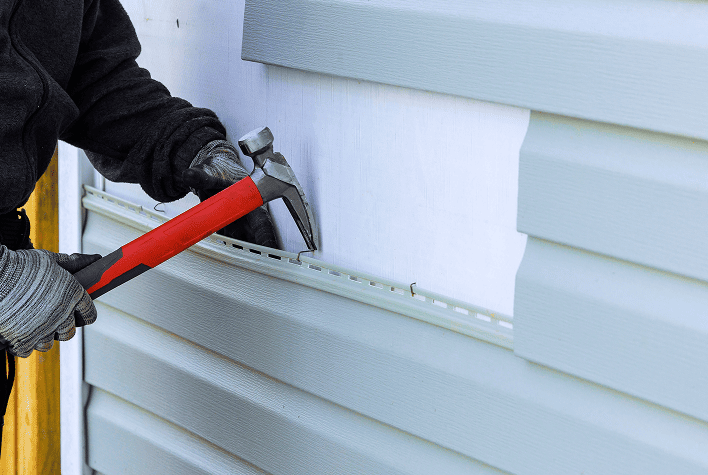
Key Points
- Material alone costs $2–$6 per sq. ft.; professional labor adds another $4–$9 per sq. ft.
- Labor typically accounts for 50–65% of your total budget.
- Style matters: lap siding is the most affordable option, while shingle siding can cost up to twice as much.
- Hardie board lasts 30–50+ years and delivers an estimated 86–114% return on investment at resale, depending on the source, year, and region.
- Getting at least three competing quotes and scheduling work in the off-season, such as fall or early winter, are two of the most effective ways to reduce costs.
Average Hardie Board Siding Cost: What the Numbers Actually Look Like
Average Material Cost
For the siding panels themselves, expect to pay $2–$6 per sq. ft., depending on the product line and finish. Premium lines like the Artisan® Collection or specialty ColorPlus® finishes will be more expensive.
For a 2,000 sq. ft. home, material costs alone typically run between $4,000 and $12,000 before installation.
Average Installation Cost
Professional Hardie board siding installation cost (labor only) is $4–$9 per sq. ft. Factors like home height, architectural complexity, and regional labor rates determine where you land in that range. For a 2,000 sq. ft. home, expect to budget $8,000–$18,000 for labor.
Average Total Cost
Combining materials and labor, here's what the price to install Hardie board siding looks like across home sizes:
| Home Size | Estimated Total Cost |
| 1,000 sq. ft. | $7,000–$15,000 |
| 1,500 sq. ft. | $10,500–$22,500 |
| 2,000 sq. ft. | $14,000–$30,000 |
| 2,500 sq. ft. | $17,500–$40,000 |
The national average for a full installation sits around $15,000–$25,000. Keep in mind that homes with complex designs or premium product lines can easily exceed these ranges.
What Is Hardie Board Siding — and Why Is It Different?
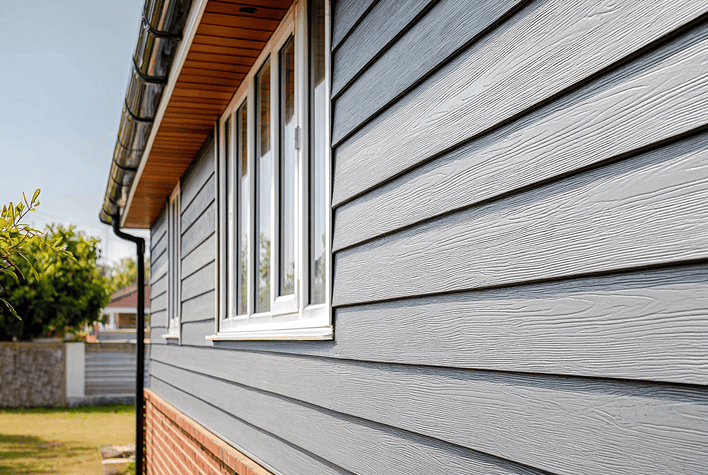
Hardie board is a brand of fiber cement siding manufactured by James Hardie Industries, the company that pioneered modern asbestos-free fiber cement siding in the mid-1980s, transitioning away from earlier asbestos-based products. It’s made from a compressed blend of Portland cement, silica sand, and cellulose (wood) fibers. This combination results in a dense, stable board with impressive resistance to severe weather and environmental wear.
What makes it stand out from other siding materials is its versatility. It can convincingly mimic the look of cedar shingles, natural wood grain, or smooth stucco at a fraction of the cost of those natural materials. It comes in a wide range of profiles and textures, from traditional horizontal lap planks to vertical board-and-batten panels and individual shingles.
Hardie board is also available in two finish types: pre-primed (which you paint after installation) and factory-finished ColorPlus®, which uses a baked-on color with a 15-year fade resistance warranty. ColorPlus boards cost more upfront, but the factory finish can delay repainting and may reduce maintenance costs over the first 15 years.
Why Homeowners Choose Hardie Board Siding
The strongest argument for Hardie board isn't its good looks — it's the combination of durability and low long-term cost. Here are the main reasons homeowners consider it:
-

Fire resistance: Fiber cement is non-combustible and carries a Class A fire rating, the highest available. In wildfire-prone or high-risk areas, this may help lower homeowners' insurance premiums, depending on the insurer and local policy rules.
-
Weather and impact resistance: Hardie board is engineered to withstand winds up to 150 mph, resist hail, and hold up to salt air in coastal environments — without cracking, warping, or rotting.
-
Pest resistance: Unlike wood, fiber cement is less vulnerable to termite, carpenter ant, and woodpecker damage.
-
Long lifespan: When properly installed and maintained, Hardie board lasts 30–50+ years. James Hardie backs this with a 30-year limited warranty on the product and a 15-year warranty on ColorPlus finishes.
-
High ROI at resale: Fiber cement siding installation has been shown to recoup approximately 86–114% of its cost at resale, making it one of the strongest exterior investments in home improvement.
What Factors Affect Hardie Board Siding Cost?
Understanding where the money actually goes helps you plan your budget accurately and spot potential savings. Here are the main cost drivers.
-

Material Expenses
The materials themselves — the siding panels, trim boards, flashing, and moisture barriers — make up a significant portion of your bill. Hardie board panel prices vary by product line:
| Product | Material Cost (per sq. ft.) |
| HardiePlank® Lap Siding | $1.00–$3.00 |
| HardiePanel® Vertical Siding | $1.80–$4.00 |
| HardieShingle® Siding | $2.00–$6.00 |
On top of the siding itself, you'll also budget for:
- HardieWrap® (weather-resistant house wrap): approximately $200 per roll
- HardieTrim® boards for corners, windows, and doors
- Flashing and fasteners specific to fiber cement
- Paint (if you choose pre-primed boards): $1.50–$2.75 per sq. ft. for professional painting
- Building permits: typically $100–$500, depending on your municipality
One thing worth knowing: Hardie board is heavy — roughly 230 pounds per 100 square feet, compared to 60–70 pounds for vinyl siding. That weight affects both shipping costs and installation complexity, increasing labor costs.
-
Labor Expenses
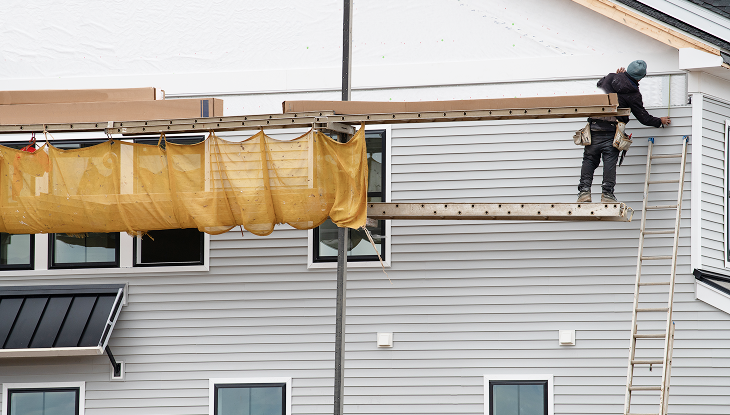
Because fiber cement is heavy, hard to cut (it requires specialty diamond-blade saws), and demands precise fitting, flashing, and caulking to maintain warranty compliance, professional installers typically charge $4–$9 per square foot for labor alone.
That means labor can account for 50–65% of your total project cost. Factors that increase labor expenses include:
- Multi-story homes: Scaffolding, lifts, and additional safety measures significantly increase installation hours.
- Complex architecture: Gables, dormers, bump-outs, and intricate trim work mean more cuts, more time, and more material waste.
- Old siding removal: Tearing off and disposing of existing siding adds $1–$2 per sq. ft., or $1,000–$3,000+ for a typical home.
- Wall repairs: Any rot or sheathing damage discovered during removal will add to the labor bill.
Hiring a James Hardie Preferred Contractor or Elite Preferred installer typically costs slightly more but is often worth it. Many Hardie warranties require strict adherence to the manufacturer's installation guidelines to remain valid, and the contractors are trained and certified in proper installation techniques.
-
Siding Style and Project Scope
Lap siding is the most affordable option because it produces minimal waste and installs efficiently. Shingle siding, on the other hand, requires cutting and fitting many small individual pieces, which is time-consuming and can cost up to twice as much as lap siding per square foot.
Project scope matters too. A full replacement Hardie board siding job on a large, multi-story home will be significantly more expensive than a partial re-side of a single-story ranch. Regional location also plays a major role: the same job costs around $30,900 in California versus $19,500–$19,800 in Georgia or Texas.
Hardie Board Siding Cost by Style: Which Profile Fits Your Budget?
James Hardie offers several siding profiles, each with different price points and installation requirements.
-

HardiePlank® Lap Siding — The Budget-Friendly Classic
Lap siding is the most popular and cost-effective Hardie board product. It features horizontal boards that overlap slightly, creating clean shadow lines and a timeless clapboard appearance that suits nearly any architectural style.
Cost range: $5–$14 per sq. ft. installed
It installs efficiently, generates the least material waste, and is widely stocked by distributors. It's available in cedar grain, smooth, and beaded textures, and in widths from 5.25" to 8.25" (the 8.25" width is standard and the most affordable).
-
HardiePanel® Vertical Siding — Clean, Modern, Efficient
HardiePanel consists of large 4×8 or 4×10 sheets installed vertically, often used in modern farmhouse or board-and-batten designs. The large panels cover more area with fewer seams, making installation faster on simple wall surfaces.
Cost range: $6–$15 per sq. ft. installed
However, vertical panels require precise cuts around windows, doors, and trim — and board-and-batten configurations (where narrow battens cover the panel seams) require additional materials and labor, pushing the price to install Hardie board siding toward the higher end.
-
HardieShingle® Siding — Maximum Curb Appeal, Maximum Cost
HardieShingle mimics the look of cedar shakes or wood shingles, with a textured, handcrafted aesthetic. It's a popular accent choice for gables, dormers, and cottage-style homes, though some homeowners use it as primary siding throughout.
Cost range: $8–$18 per sq. ft. installed
Shingle siding is the most expensive Hardie profile — often costing up to twice as much as lap siding. Each small piece requires individual cutting, alignment, and fastening, which is significantly more labor-intensive than installing long lap boards. Excess material waste during cutting also adds to the cost of installing Hardie board siding.
-
HardiePanel® Board and Batten — The Farmhouse Premium
The board-and-batten style — wide vertical panels with narrow strips covering the seams — has surged in popularity thanks to the farmhouse and craftsman design trends. It's typically achieved using HardiePanel vertical siding with HardieTrim® battens.
Cost range: $6–$18 per sq. ft. installed
Board and batten is approximately 1.5 times more expensive than standard lap siding. This higher price is caused by the extra trim materials and installation labor required. If you love the aesthetic but want to manage costs, consider using it as an accent on gable ends or entryways rather than across the entire home.
Hardie Board vs. Other Siding Materials: An Honest Comparison
The Hardie board siding cost looks high until you compare it against competing materials on a total-cost-of-ownership basis. Here's how the main alternatives compare.
Vinyl Siding — Lower Upfront, Higher Long-Term Cost
Vinyl is the most widely installed siding in the United States and the go-to choice for budget-conscious homeowners. It's lightweight, easy to install, and requires almost no maintenance.
| Factor | Hardie Board | Vinyl |
| Installed cost | $7–$18/sq. ft. | $3–$7/sq. ft. |
| Lifespan | 30–50+ years | 20–40 years |
| ROI at resale (varies by region and year) | ~86–114% | ~96.5% |
The cost gap is real, but so is the durability gap. Vinyl is vulnerable to cracking in extreme cold, warping or melting near heat sources, and fading from UV exposure. It can also crack from hail or impact damage in ways that often require full panel replacement rather than a simple patch. Within 50 years, Hardie board typically proves cheaper in total cost when factoring in replacement cycles and maintenance.
Wood Siding — Beautiful but High-Maintenance
Real wood siding — cedar, redwood, or pine — offers authentic character and visual warmth that fiber cement can only imitate. But it comes with high ongoing costs.
Wood siding requires repainting or restaining every 5–10 years to prevent rot and moisture damage. It's also susceptible to termites, woodpeckers, and mold. While wood's initial installed cost can be similar to Hardie board ($6–$15 per sq. ft.), the lifetime maintenance expenses typically make it the most expensive option over the long run.
Stucco — Regional Favorite with Its Own Tradeoffs
Stucco — a cement-based plaster applied directly to exterior walls — is popular in southwestern and Mediterranean-style homes. It's durable and fire-resistant, but it's also prone to cracking as homes settle, and those cracks can allow moisture intrusion if not promptly repaired.
Installed stucco costs typically run $8–$14 per sq. ft., similar to Hardie board, but repairs are more complex and expensive. Unlike Hardie panels, stucco is a site-applied finish — repairs require matching the texture and color, which can be difficult to do invisibly. Hardie board panels are more modular: damaged boards can be replaced individually without disturbing the surrounding siding.
How to Reduce Hardie Board Siding Costs Without Cutting Corners
Hardie board isn't cheap, but there are legitimate ways to reduce the price without compromising on quality or voiding your warranty.
-

Get at least three competing quotes. Labor rates for the same project can vary by 20–30% between contractors in the same area. Always compare quotes from at least three siding contractors — and compare them on the same scope of work.
-
Schedule work in the off-season. Siding contractors are busiest in spring and summer. Scheduling your project for fall or early winter can reduce your total bill by 5–10% due to lower demand and more flexible contractor schedules. Hardie board installs best between 40°F and 85°F, so fall typically offers ideal conditions in most climates.
-
Choose lap siding over shingles. If you love the look of HardieShingle but are watching your budget, consider using it as an accent — on gable ends, dormer faces, or around the entryway — while installing more affordable lap siding on the main walls. This hybrid approach delivers visual interest at a fraction of the full-shingle cost.
-
Opt for pre-primed over ColorPlus® if you want to paint. If you plan to change your exterior color in a few years, pre-primed boards let you paint on your own schedule and avoid paying the ColorPlus premium upfront. Just factor in the eventual painting cost ($1.50–$2.75 per sq. ft.) when planning your budget.
-
Handle old siding removal yourself, if your contractor allows it. Some Hardie board siding contractors will discount their quote if the old siding is already removed when they arrive. If you're comfortable doing the teardown yourself, this can save $1,000–$3,000 in labor — just confirm with your contractor before starting, as some prefer to manage removal to assess wall conditions underneath.
-
Use standard color stock. If you're going with the ColorPlus® finish, the Statement Collection (typically 15–20 stock colors, depending on your region) is stocked locally and available immediately. Special-order colors like the Magnolia Home Collection can add weeks to your timeline and extra cost. Standard trim sizes (3.5" or 5.5") are also significantly cheaper than specialty decorative options.
-
Compare similar-quality alternatives. If Hardie board's price is simply unaffordable, LP SmartSide is a comparable engineered wood siding product that can cost up to 25% less, while still offering excellent durability and a good warranty. It's worth asking your contractor about.
Conclusion: Is Hardie Board Worth the Investment?
Hardie board siding isn't the cheapest option on the shelf — but for homeowners who prioritize durability, low maintenance, and long-term value, it's one of the best investments you can make in your home's exterior. A lifespan of 30–50 years means many homeowners will not need to replace Hardie board siding as long as they live in their homes. Add in an estimated 86–114% ROI at resale, potential insurance savings from fire resistance, and lower maintenance costs compared to wood, and the math often favors Hardie board over cheaper alternatives.
When you're ready to move forward, work with verified, pre-screened contractors who specialize in fiber cement installation. HomeBuddy connects homeowners with local, vetted siding professionals who can provide accurate quotes and ensure your installation meets warranty requirements from day one.